Brief No. 002 · Data and infrastructure
AIFOD Examines Non-Monetary Cooperation Model for AI Infrastructure and Support
Summary
At the Geneva Summit 2026, AIFOD explored non-monetary assistance models to assemble computing resources, technical expertise, and governance packages for public sectors.
Disclosure: This story is based on material from AIFOD, the publisher of this site.
Event report AIFOD Geneva Summit, August 2026. Published 18 October 2026.
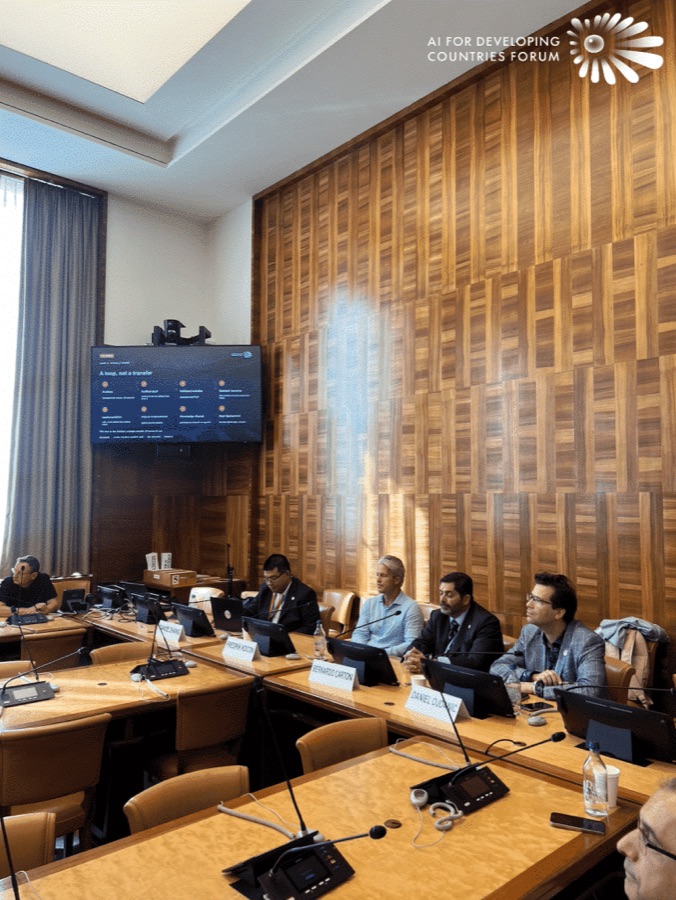
Public-sector entities in developing nations frequently face obstacles when attempting to convert artificial intelligence concepts into operational systems. During the Geneva Summit 2026 organised by the AI for Developing Countries Forum (AIFOD), which publishes this site, an IRB AID session explored how non-monetary partnerships could overcome limitations in computing capacity, specialised training, software platforms, and technical guidance.
Assembling complementary technical resources
The discussion, co-chaired by Fredrik Kocon, Bernardo Cartoni, Tianze Zhang, and Daniel Ojdanic, proposed moving away from traditional financial aid toward pooled institutional capabilities. Rather than relying on a single donor, the model envisions grouping distinct inputs around defined public-sector requirements. For example, one partner might contribute an AI application, another can supply the necessary compute infrastructure, and additional contributors provide training or deployment support.
Participants stressed that projects must begin with specific institutional problems rather than available technology. Structuring targeted "need packages" allows partners to stage small-scale geographic pilots. These trials help public authorities assess system performance and institutional governance before scaling deployments.
Delivery oversight and accountability
Because non-monetary assistance still carries institutional obligations and operational risks, participants noted that recipient trust depends heavily on transparent oversight. Delegates underlined that formal pledges require mechanisms to ensure execution, drawing a line between delivery by partners and overall accountability. The session concluded that AIFOD should support traceability, reporting, and auditability to verify whether agreed resources are supplied and produce demonstrable value.
How this story was made
This story was rewritten with AI from an article published by AIFOD, linked below.
If you spot a mistake, write to hi@af.net. Read our editorial standards.
References
- af.netAIFOD: From Commitment to Implementation: AIFOD AID Examines a New Model for Non-Monetary AI Cooperationhttps://af.net/news/from-commitment-to-implementation-aifod-aid-examines-a-new-model-for-non-monetary-ai-cooperation/