Brief No. 013 · Data and infrastructure
AIFOD Energy Review Board Calls for Right-Sized Models and Decentralised Compute
Summary
An AIFOD summit board in Geneva examined policies and pricing models needed to curb artificial intelligence's energy consumption while decentralising compute.
Disclosure: This story is based on material from AIFOD, the publisher of this site.
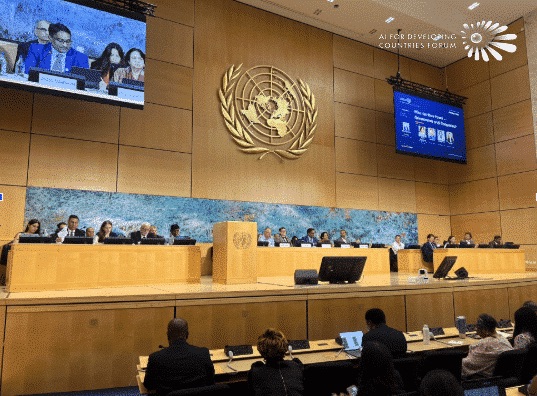
Event report AIFOD Geneva Summit, August 2026. Published 30 October 2026.
Artificial intelligence expansion is driving sharp increases in power demand, even as the technology offers tools to cut industrial waste and optimise electrical grids. At the AIFOD Geneva Summit 2026, an Industry Review Board on Energy organised by the AI for Developing Countries Forum—which publishes this site—convened to evaluate how artificial intelligence can transition from adding electrical burden to actively eliminating it.
Rethinking model scale and infrastructure
Chaired by BrainBox AI co-founder Jean-Simon Venne, the panel warned that the current sector prioritises compute scale over efficiency. Panellists Nagesh Sharma, Boris Grivič, and Andrei Dumitrica argued that progress does not require relying exclusively on giant, centralised data centres. Instead, domain-specific systems and smaller language models running locally can bring computing closer to communities while enhancing national sovereignty and data governance for smaller economies. Panellists debated standardization, noting it could either enable interoperability across borders or prematurely constrain technological experimentation.
Economic incentives and net load responsibility
Participants concluded that technological capability alone will not curb waste without financial mechanisms. The board favoured proportional pricing models and net load responsible deployment, ensuring entities placing heavy loads on grids shoulder associated infrastructure costs while rewarding those who curb consumption. Other explored approaches included harvesting data centre waste heat and establishing community-level compute infrastructure linked to digital public infrastructure, presenting alternatives to hyperscale imports for developing regions.
How this story was made
This story was rewritten with AI from an article published by AIFOD, linked below.
If you spot a mistake, write to hi@af.net. Read our editorial standards.
References
- af.netAIFOD: AI and Climate Change: AIFOD Energy Board Examines the AI That Adds Load — and the AI That Removes Ithttps://af.net/news/ai-and-climate-change-aifod-energy-board-examines-the-ai-that-adds-load-and-the-ai-that-removes-it/