Brief No. 021 · AIFOD events
AIFOD Review Panel Dismisses AI Rights Amid Unresolved Human Protections
Summary
An AIFOD expert panel rejected granting legal rights to artificial intelligence, arguing that safeguarding human welfare and corporate accountability must remain paramount.
Disclosure: This story is based on material from AIFOD, the publisher of this site.
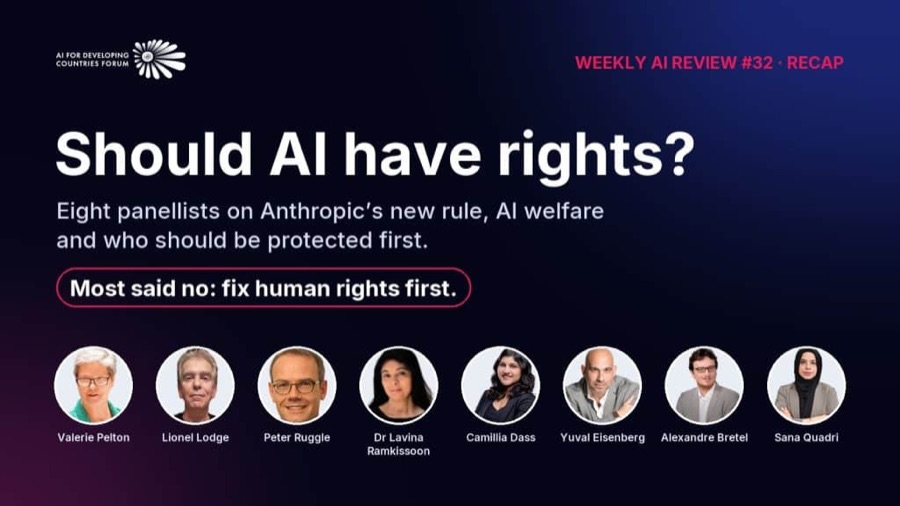
Event report AIFOD Weekly AI Review, Session 32. Published 7 November 2026.
Panellists convened for Session 32 of the Weekly AI Review, which is organised by the AI for Developing Countries Forum (AIFOD), rejected the notion that artificial intelligence systems should receive legal rights. The discussion followed Anthropic's updated terms prohibiting sustained and needless abuse of its Claude models. None of the eight participating experts endorsed rights for automated systems, arguing instead that foundational protections for data workers, users and broader populations must take priority.
Corporate liability and operational limits
Participants challenged the motives behind anti-abuse policies, with some viewing them as corporate risk management and brand defence rather than moral recognition. Legal experts stressed that established frameworks like corporate personhood depend on clear liabilities, assets that can be seized and human accountability, none of which apply directly to software programmes. Panellists observed that systems mimic emotional responses purely through programming, warning that vague behavioural restrictions risk giving providers opaque power to lock ordinary users out of critical digital services.
Distinguishing conduct from entitlements
While some speakers argued that treating digital tools respectfully could foster better behavioural habits among humans, the panel drew a firm distinction between user conduct rules and legal protections. An AIFOD community vote presented at the session showed that 63 per cent of respondents view AI purely as an instrument to serve human interests, even though a majority supported basic limits on abusive interactions. The consensus concluded that establishing corporate accountability and ensuring basic protections for people must precede any discussion of rights for synthetic agents.
How this story was made
This story was rewritten with AI from an article published by AIFOD, linked below.
If you spot a mistake, write to hi@af.net. Read our editorial standards.
References
- af.netAIFOD: Should AI Have Rights? AIFOD Weekly AI Review Panel Says Fix Human Rights Firsthttps://af.net/news/should-ai-have-rights-aifod-weekly-ai-review-panel-says-fix-human-rights-first/