Brief No. 008 · National policy
AIFOD Geneva Summit: State Power in AI Depends on Internal Capability, Not Tech Ownership
Summary
Panelists at an AIFOD Geneva Summit dialogue argued that government power over AI relies on institutional competence, energy infrastructure and skills rather than asset ownership.
Disclosure: This story is based on material from AIFOD, the publisher of this site.
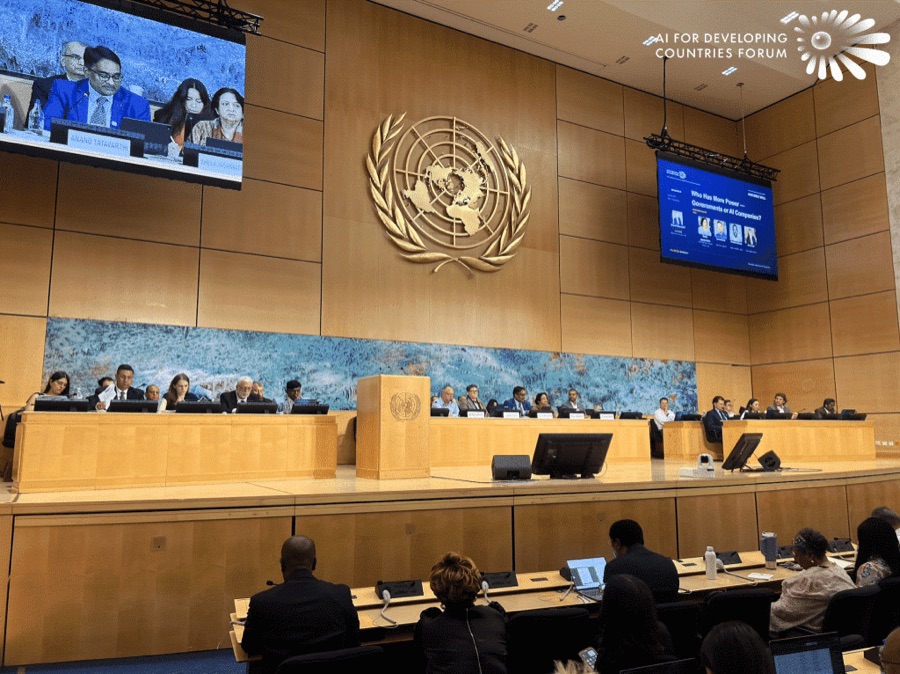
Event report AIFOD Geneva Summit, August 2026. Published 25 October 2026.
State sovereignty in artificial intelligence will hinge on internal public capability rather than competition over asset ownership with private technology firms, according to experts speaking at the Geneva Summit 2026 organised by AIFOD, which publishes this site.
Panellists argued that the primary international divide lies between societies generating the skills to govern technology and those forced to absorb imported rules. Sheila Jagannathan emphasised that human development forms the core of long-term state authority, noting that "the AI divide will be between countries that write the rules and those that inherit them." Building contextualised educational systems and domestic digital literacy ensures administrations can properly oversee public procurement and research ecosystems.
Infrastructure and independent decision-making
Practical implementation requires foundational physical assets alongside hands-on testing. Boris Grivić highlighted the utility of compact, specialised AI systems tailored for local needs such as agriculture, legal tasks and water administration, which do not need the computing scale of frontier models. Addressing physical bottlenecks, Frederic Emane warned that developing economies must secure reliable electricity generation before AI infrastructure can expand, urging long-term regional planning to attract power investments.
Maintaining authority ultimately requires sovereign decision-making over technology. Rene Kok stressed that administrations do not need to possess every strategic asset, but must maintain the domestic expertise to evaluate, test and challenge commercial systems. As Kok observed, "government power comes from capability, not necessarily ownership." Without internal technical literacy, states risk failing to enforce oversight, while cross-border agentic tools further complicate traditional jurisdictional control.
How this story was made
This story was rewritten with AI from an article published by AIFOD, linked below.
If you spot a mistake, write to hi@af.net. Read our editorial standards.
References
- af.netAIFOD: Who Holds the Power in the Age of AI? AIFOD Dialogue Puts Government Capability at the Centrehttps://af.net/news/who-holds-the-power-in-the-age-of-ai-aifod-dialogue-puts-government-capability-at-the-centre/